
1937 cinema
a new wind blows

In 1937, the world is already enmeshed in globe-spanning proxy wars and stands on the brink of World War II. Western cinema records this conflict’s lead-up distinctly, as a mass exodus from the German film industry has bolstered its counterparts in other western nations, particularly France and the U.S.. Tracking German cinema across the 1930s, it is impossible not to detect the death of intellectual life that accompanied the rise of fascism. By 1937, fascist kitsch was dominating German film, under the increasingly heavy thumb of UFA. Look no further than one of Hitler’s favorite films, Der Zerbrochene Krug, which feels somehow brutal and childish despite a memorable and at times genuinely funny central performance by Emil Jannings. In contrast, France’s cinematic output of 1937 is steeped in detail, delicacy, and emotion. In Hollywood, the ongoing impact of the Hays Code continues to define the year, but the American film industry has found new ways to engage audiences, showing its flexibility and ultimately dooming the rigidly dogmatic Hays Code (though it will continue to hobble American filmmakers for decades). For this viewer, 1937 feels like emerging from Hollywood’s slump of the mid-30s. Yes, American movies of this year were still mired down by the Code and I am nostalgic for the unapologetically lurid delights of the early 30s. However, Hollywood filmmakers have started to learn to be subtle and slippery in order to evade censorship. The sophistication of Hollywood style that emerges this year obscures specific social context from both viewers and censors while preserving a form of emotional realism necessary to appeal to consumers still reeling from the worst years of the Depression. The tone here is very different than the exuberance of post-war cinema, but the extreme level of technical polish that defines mid-century Hollywood has begun.
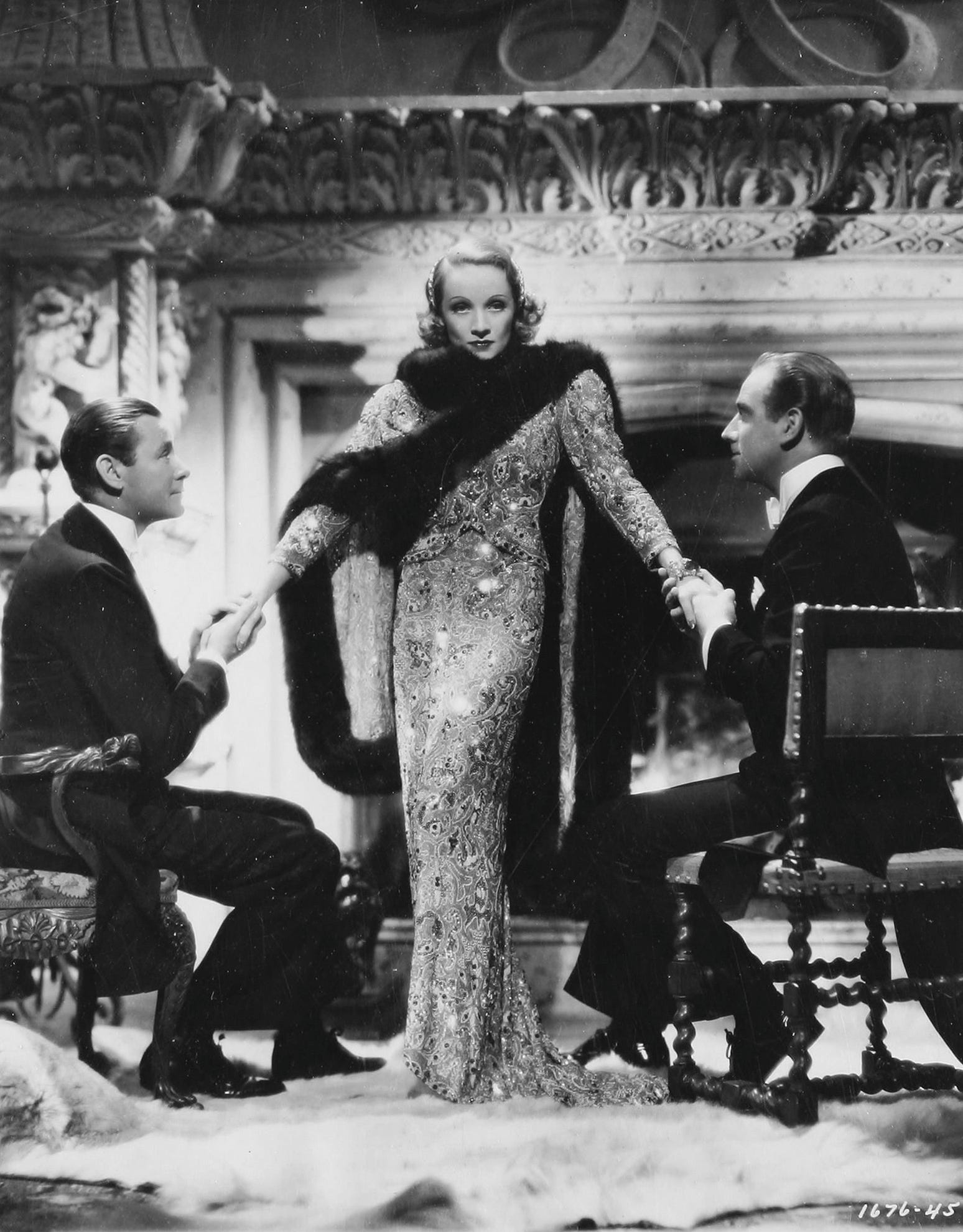
Thematically, Hollywood seems to have dropped its knee-jerk prudishness that defined the immediate aftermath of the Hays Code. Lubitsch’s Angel, for example, openly celebrates infidelity and invites viewers to identify with the illicit couple, even though the cuckolded husband’s chief flaw seems to be be blandness and (ultimately justified) suspicion. History is Made at Night takes a similar approach, although here the husband is downright villainous, in keeping with the film’s melodramatic tone. Many American movies this year feature divorce. Divorce rates have held roughly steady since about 1920, following a steep uptick in the previous decade. They will hold relatively steady through the 1950s, before exploding in the 60s and 70s. However, there is a new frankness around divorce in films of the mid-to-late 30s, perhaps because this topic could absorb some small measure of both realist and sensationalist impulses denied under the Hays Code. Divorce is a particularly key part of screwball comedies such as The Awful Truth and Second Honeymoon. Crucially, the characters in these comedies wind up marrying their original partners. These comedies of remarriage allowed filmmakers to have it both ways — slyly challenging the institution of marriage without technically breaching the Hays Code’s strict ban on depictions of adultery.
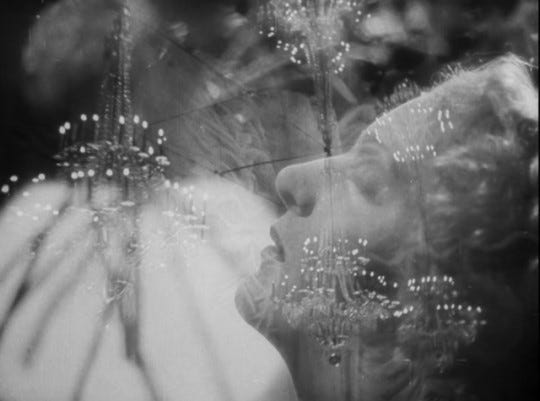
Looking across the pond, 1937 filled me with a sense of Francophilia. Especially in contrast to some of the more lifeless Hollywood products of the last few years, French movies of 1937 have a freshness, and a notable interest in small details and behaviors, and visual details that delight. Le Roman de Renard’s surprisingly expressive stop-motion figures possess a real pathos. Un carnet de bal’s stylishly filmed parable prefigures postmodern explorations of love and possiblity. Le Mort du Cygne’s childhood act of violence and tragedy feels even starker set against Hollywood’s depictions of childhood— this is no Shirley Temple joint. Famously, some of Le Grand Ilussion’s most striking content is the wordless tenderness between Eric von Stroheim’s layered Captain von Rauffenstein and the potted begonia that sits on his window. The best moments of these films are quiet and nuanced, but that’s not to say they are overly cerebral or demanding.
Another highlight of 1937, and the 1930s in general, is Yiddish-Language filmmaking. Yiddish films, produced in both Europe and the U.S., provide an invaluable window into Jewish life in crisis. In Europe, films like The Dybbuk highlight Jewish stories without skimping on chills and thrills. By 1937 the Holocaust has begun but is not at its full height. For me, the Yiddish films or Europe are pervaded with a melancholy that is impossible to separate from historical hindsight. Meanwhile, in the U.S., films like Grine Felder play to nostalgia for rural European Jewish life that challenged by industrialization and antisemitism even before the Holocaust. The open-air shooting of Grine Felder, likely a result of limited budget, brings a freshness reminiscent of the earliest days of filmmaking.
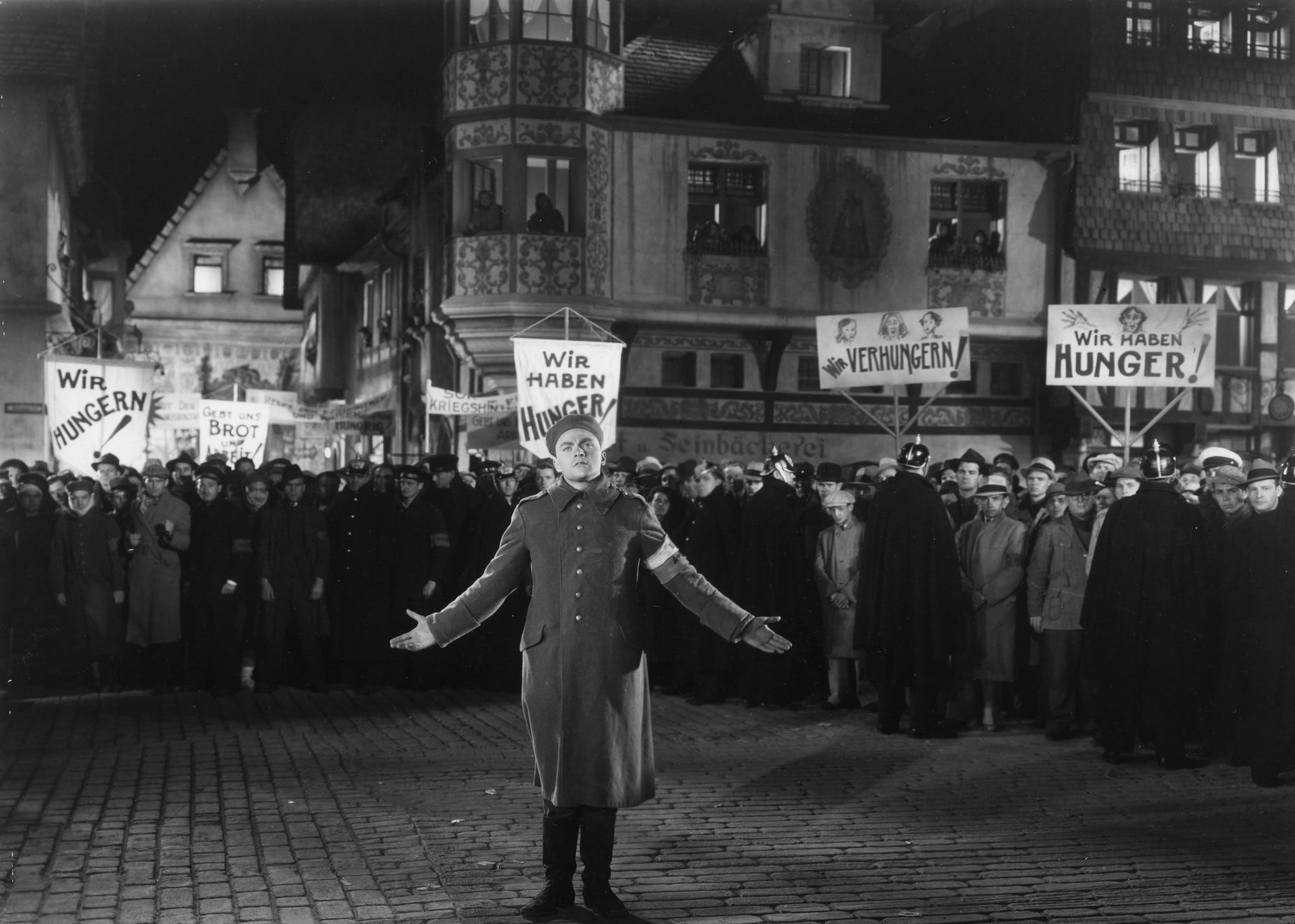
With World War II just on the horizon there’s a marked difference in war movies on both sides of the Atlantic. The first world war, once a topic of unflinching chronicles of menial violence, has become a backdrop of espionage melodramas and moral parables. Madamoiselle Docteur, Dark Journey, Grand Illusion all exemplify this trend to some extent. In The Road Back, probably the darkest war film of 1937, war comes home. The film deals frankly with difficulties reacclimating to civilian life, including one of the first depictions I have encountered of what will eventually be called PTSD. The film was plagued by censorship at the hands of studio heads, who caved to Nazi pressures and reedited the film, inserting more comic relief and softening the moral message of the picture. It’s an interesting case study in the internal conflict within Hollywood with respect to rising fascism and the increasing likelihood of war.
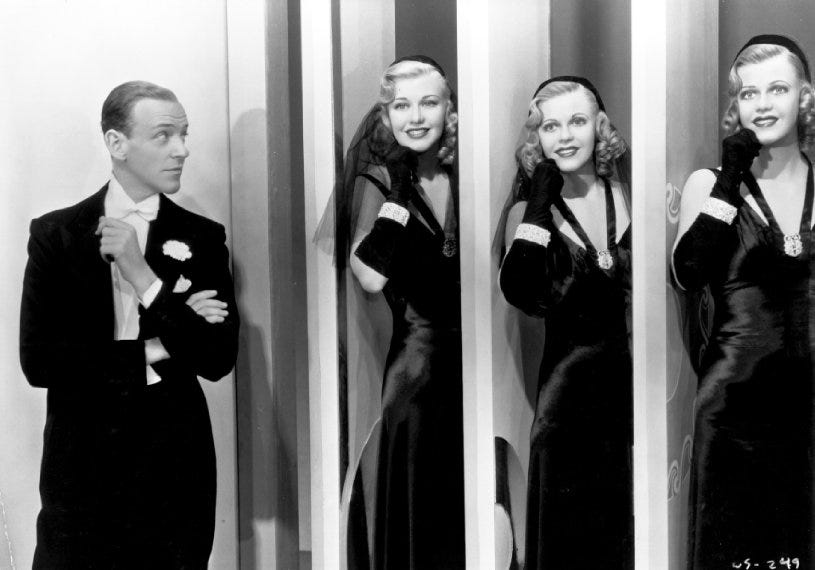
The Hollywood musical meanwhile, turns inward. A Star is Born transforms the showbiz story from the stuff of backstage musicals to a hard-hitting melodrama, delivering the death knell to the chorus girl. Although the Fred and Ginger musicals like Shall We Dance will carry the easy breezy, performance focused musicals that defined the mid-30s well into the next decade, zany backstage musicals threaded with melodrama and social commentary like Gold Diggers of 1933 and Footlight Parade are largely, even in 1937, a thing of the past. Within this context, Stage Door reads as a culmination of the plucky chorus girl musical that defined the early 1930s. Yet its sleekness, from costumes, to editing, to performance, anticipates the 1940s. These films increasingly reflect on Hollywood’s own machinery, mythologizing the rise and fall of stardom. For the first time, it’s easy to see the specter of Sunset Blvd. or even What Ever Happened to Baby Jane on the horizon.
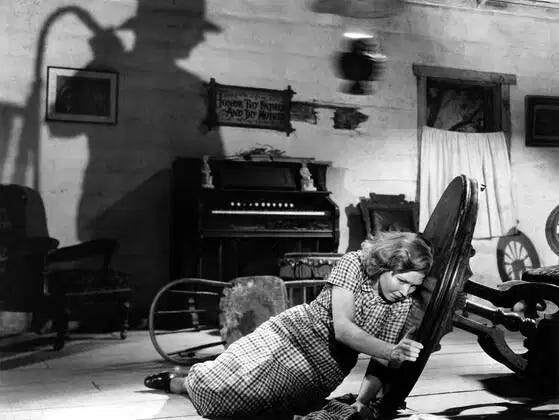
When gazing outside of Hollywood itself, attempts at social realism of this moment in Hollywood tend to miss either genuine realism or pulp. Mountain Justice is a pallid echo of salacious pre-Code scandalfests like The Story of Temple Drake. One Mile from Heaven undermines its own social consciousness with Bill Robinson tap routines (not that I will ever complain about watching Bill Robinson). The result is a tonal ping-pong match that never quite resolves. The more successful dramas Hollywood produced in 1937 concern emotional pain rather than material suffering, even when the stories are set into motion by economic scarcity. This approach can achieve deeply affecting results, as in Make Way for Tomorrow, where an elderly couple’s tragic separation is precipitated not only by their economic limitations, but by the emotional stinginess of their children. The stakes here concern dignity rather than survival, and the film hits all the harder for that. This dream-meets-reality tone is heightened by the slightly on-the-nose makeup: it’s clear that this is a Hollywood set, with no pretensions of documentary. Other films, such as The Bride Wore Red and Easy Living, follow suit, balancing frothiness with moments of economic frankness. Critically, none of these films lack levity. After all, in Hollywood, audience enjoyment comes first.
Some Hollywood films in 1937 shoot so far into dreamland that they become compelling artifacts of pop consciousness, effervescent and devoid of material context in interesting ways: Vogues of 1938, It’s Love I’m after, The Perfect Specimen, Tovarich are all examples of this, but I will focus on Vogues for brevity’s sake. The characters of Vogues of 1938 float through an inconsequential plot on sets that feel like magazine pictorials, serving more as a feast of aspirational consumption than a narrative feature. There is a feeling of a catalog come to life, grounded only by the ever-believable Joan Bennett. It’s a mesmerizing artifact of its era
.
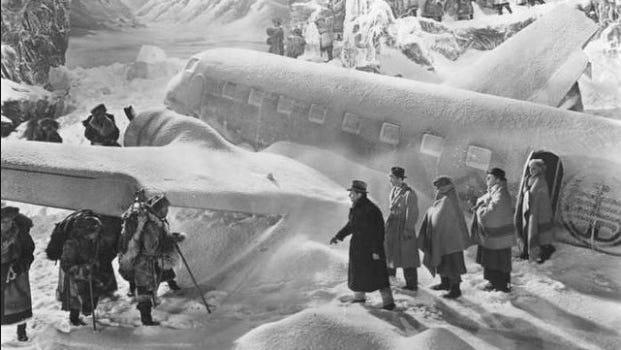
In keeping with my posts from the last couple years, 1937 continues the trend of films as exotic jaunts through imagined distant lands or distant times. These settings displace contemporary anxiety into distant geographies or historical pasts, offering adventure, empire, or spiritual escape in place of immediacy. In Lost Horizon, the hidden utopia of Shangri-La functions as a fantasy of withdrawal, a serene alternative to the chaos of modern geopolitics, where time itself slows and conflict dissolves. In Old Chicago looks backward to the Great Fire of 1871, transforming urban catastrophe into spectacle and implicitly reassuring audiences that even total destruction can be survived and narrativized. Wee Willie Winkie filters imperial conflict through the perspective of a child, softening the violence of colonial rule into a story of innocence and loyalty, where empire appears benevolent and its violent consequences are invisible. Conquest, set in Napoleonic Europe, reframes war as romantic melodrama, subordinating political upheaval to personal passion and star power. The Hurricane, by contrast, stages its drama in a colonized Pacific setting, where natural disaster and colonial injustice intertwine, yet the emphasis on spectacle and environment ultimately diffuses its critique into visual awe. Finally, The Prisoner of Zenda offers a quintessential adventure of aristocratic doubling and political intrigue in a fictional European kingdom, where questions of governance and legitimacy are resolved through individual heroism rather than systemic change. Across these films, distance, whether temporal, geographic, or fictional, creates a buffer that allows audiences to engage with danger, disorder, and power without confronting their immediate historical reality.
In totality, 1937 feels like a year of negotiation between constraint and invention, realism and evasion, gathering crisis and the desire to look elsewhere. Across national cinemas, filmmakers are clearly responding to the same pressures, but in radically different registers: Germany is narrowing, France is focusing, and Hollywood is sidestepping. As war creeps closer, I’m interested to see what 1938 will hold.
Recommended Viewing:
Ali Baba Goes to Town
The Awful Truth
The Bride Wore Red
Un carnet de bal
Conquest
Dangerously Yours
Dark Manhattan
A Day at the Races
Dick Tracy
Der Dibuk
Easy Living
Ever Since Eve
Every Day’s a Holiday
Fire Over England
La Grande Illusion
The Great Garrick
Grine Felder
History is Made at night
Hollywood Hotel
The Hurricane
In Old Chicago
It’s Love I’m After
Kid Galahad
Knight Without Armour
The Last of Mrs. Cheyney
Love is News
Make Way for Tomorrow
Mannequin
Marked Woman
La Mort du Cygne
Nothing Sacred
The Old Mill
On the Avenue
One Mile from Heaven
Pépé le Moko
The Perfect Specimen
Pick a Star
Popeye the Sailor meets Ali Baba’s Forty Thieves
The Prisoner of Zenda
The Road Back
Le Roman de Renard
Second Honeymoon
Shall We Dance
Snow White and the Seven Dwarfs
Stage Door
A Star is Born
Stella Dallas
Stolen Holiday
Street angel
Street of Shadows
They Won’t Forget
Zu neuen Ufern
Vogues of 1938
Way out West
You Only Live Once
Young and Innocent
Zorro Rides Again